
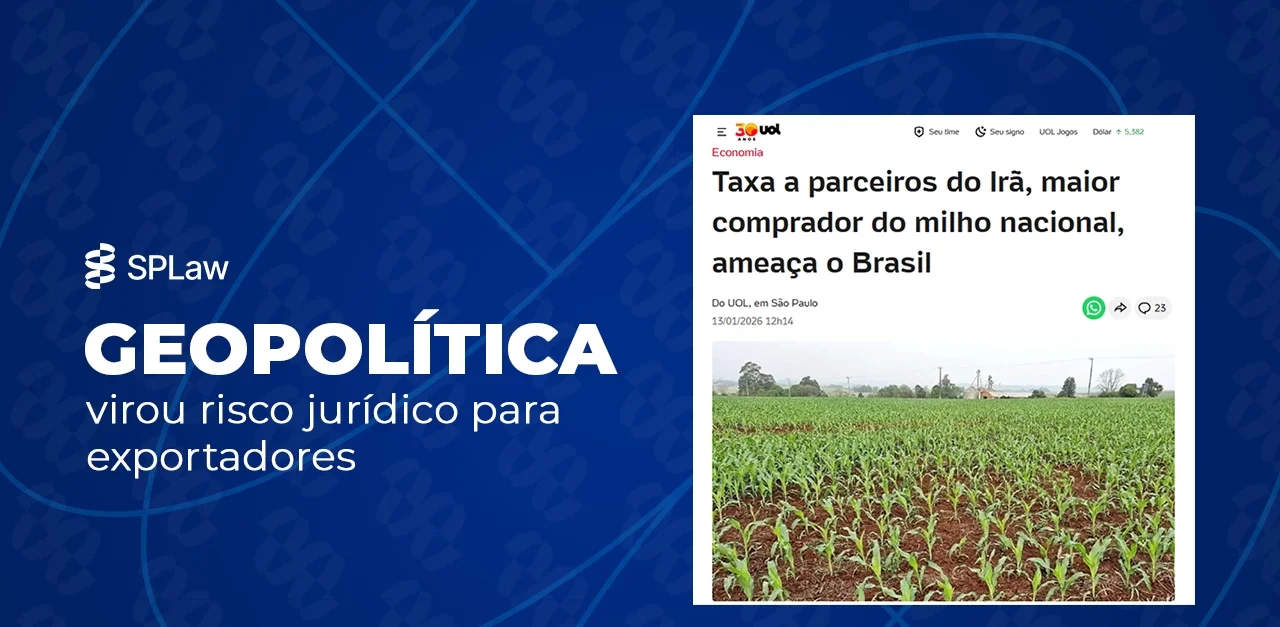
The recent indication that the United States government may impose tariffs on countries that maintain trade relations with Iran has direct, yet still largely overlooked, implications for Brazil.
260113-post-sancoes-ira-exportacoes-brasileiras-blog
According to a report published by UOL, Iran accounted for 23.1% of Brazilian corn exports in 2025, making it the leading destination for the product. Although bilateral trade is limited overall, the Brazilian agribusiness sector’s dependence on this specific market exposes domestic companies to indirect risks arising from international sanctions.
President Donald Trump’s announcement reinforces an already well-established trend: geopolitical measures can have extraterritorial effects, impacting contracts, supply chains, insurance, financing, and compliance, even beyond the jurisdiction of the country imposing the sanctions.
For exporting companies, the central issue is not merely trade with Iran, but also the possibility of cross-border restrictions, higher costs, and legal uncertainty in strategic markets.
This scenario requires greater attention to contractual clauses, the assessment of international regulatory risks, and continuous monitoring of the geopolitical environment, which is no longer simply a backdrop but has become an active business variable.